March 2015
WE ARE ALL IMMIGRANTS TO THE UNITED STATES,
EXCEPT NATIVE AMERICANS
By the Reverend Dr. J. Herbert Nelson, II
Director, Presbyterian Church (U.S.A.) Office of Public Witness
When an alien resides with you in your land, you shall not oppress the alien. The alien who resides with you shall be to you as the citizen among you; you shall love the alien as yourself, for you were aliens in the land of Egypt: I am the Lord your God.
- Leviticus 19:33-34
Meeting the “Support Our Law Enforcement and Safe Neighborhoods Act (SB1070)” at the Door
Upon my arrival as Director of the Presbyterian Church (U.S.A.) Office of Public Witness (OPW) in Washington, DC, in May 2010, SB 1070 was passed by the Arizona State legislature.[1] A local evening newscast showed protestors on both sides demonstrating around the Arizona State Capitol. As I watched the local broadcast it was difficult to make sense of the need for such a bill given the growing populations of immigrants in the United States. Was the motivation fear or the continued need for power, dominance, and control among the already powerful?
 |
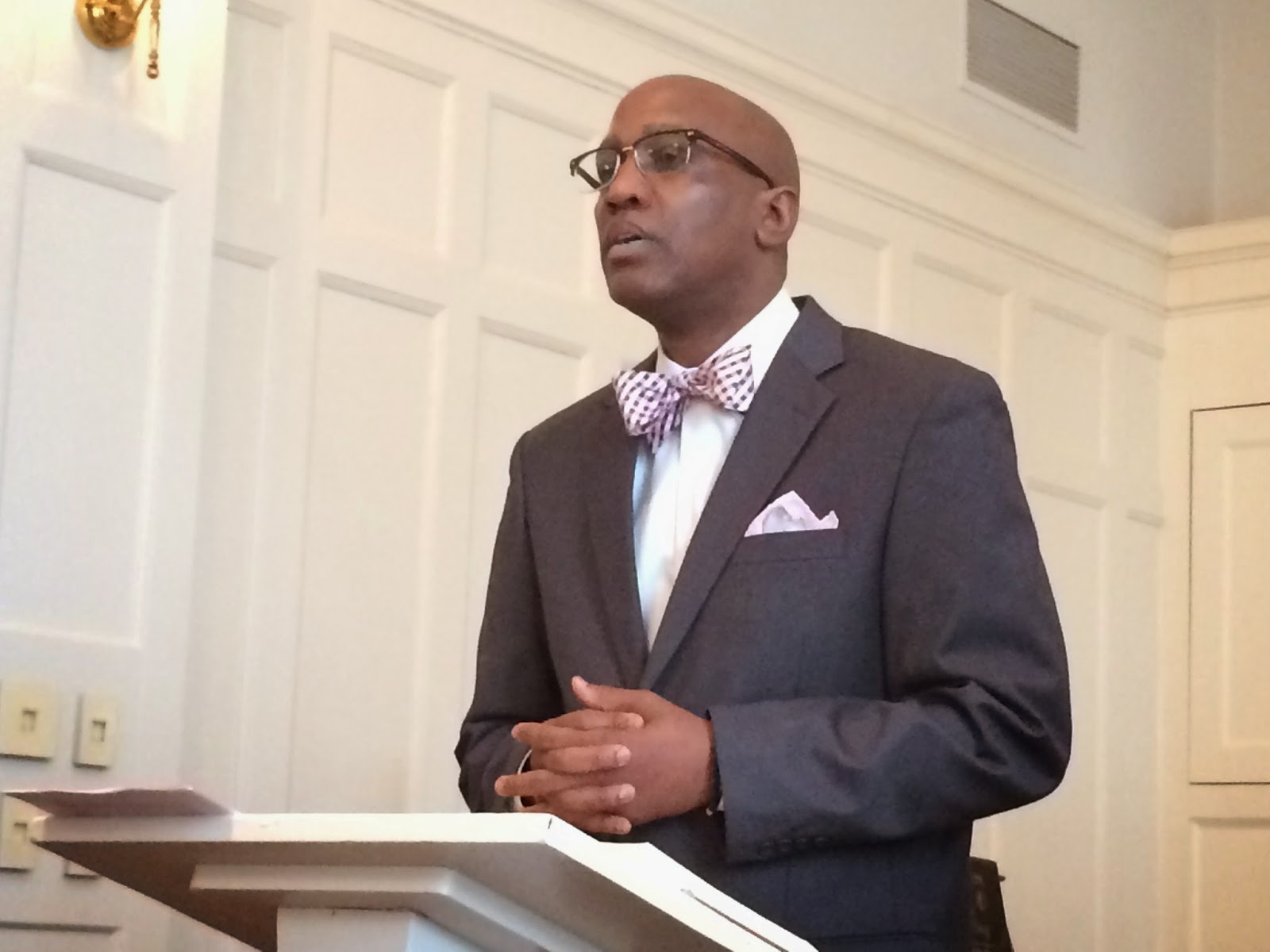
| J. Herbert Nelson preaches at Faith Rally for DACA |
In my own ministry prior to coming to Washington, I witnessed the dynamics of power and fear through my participation in Black/Brown coalitions, worker justice struggles, pastoral care, and assisting immigrants to bring their families to the United States. I have encountered the contextual struggles of poverty in Memphis, TN, and other southern communities where immigrants, particularly from the Global South, are accused of undercutting the job market because of a perceived willingness to work for lower wages. These divisions created internal struggles, particularly among communities of poor and under-educated African Americans, Latinos, and Whites. Many of these groups lived in close proximity to one another. Therefore, the community struggled with issues regarding the provision of education, law enforcement, language accommodations (related to public services), and a host of other necessary community accommodations for newly arrived immigrants.
Upon transitioning to Washington, DC, it became clear that the U.S. Congress was refusing to make any significant reform to U.S. immigration policy, particularly given the approaching midterm election that threatened to change the composition of the United States House of Representatives.[2] Meanwhile, Arizona, a border state, was still experiencing large numbers of immigrants entering without documentation. SB 1070 in Arizona represented a state measure to control its own destiny regarding the immigration and border debate. The fear of many in the justice advocacy community was that SB 1070 and copycat legislation in other states would increase racial profiling.
Going West
I traveled to Grand Canyon Presbytery in May 2010, for several listening sessions among Presbyterians. This was my first official visit to a Presbytery meeting as Director of the PC(USA) Office of Public Witness. The Presbytery leadership set up local gatherings and provided time on the floor of the Presbytery meeting for me to be introduced and share information about the Office of Public Witness. Here are two significant learning outcomes from my travel to Arizona:
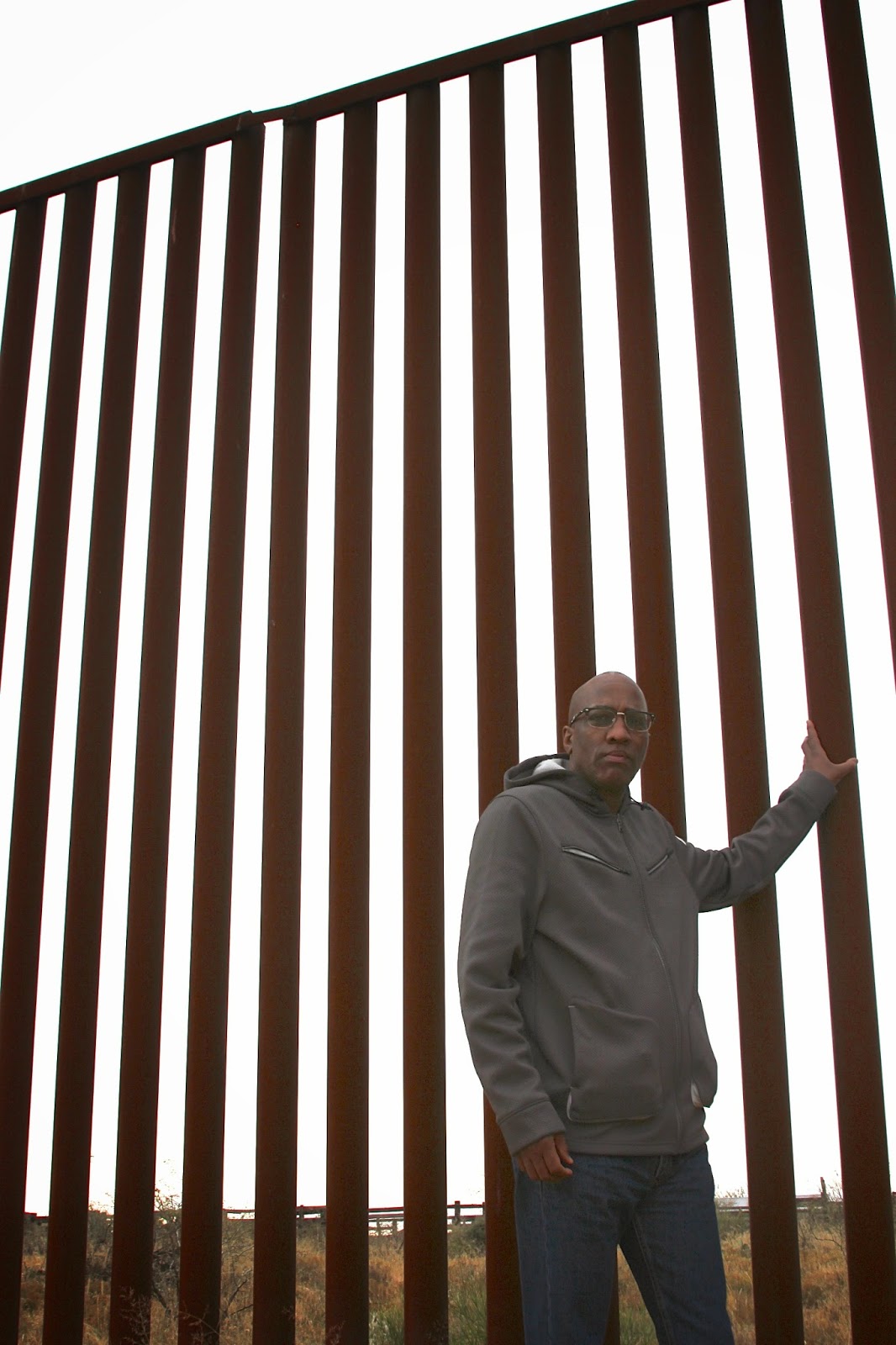 |
| J. Herbert Nelson at the Border Wall in Sasabe, AZ |
First, relationships between persons crossing the border from Mexico and employers in the United States existed for years without major problems until the government intervened. This theme was echoed: the people of Arizona and Mexico lived with a modicum of cooperation until the construction of the border fence intervened. According to these Presbyterians in Arizona, fences were not built to prevent persons crossing the border as in other border states. Instead, the rough terrain was trusted to serve as a deterrent to border crossing. However, the escalating numbers of people crossing the border and the rising number of human remains found in the desert along the border are indications that freedom and economic livelihoods are worth sacrifice. Indeed, they are more important to many than we realize, or perhaps we just do not understand how truly desperate people are.
I heard testimonies about persons crossing the Mexican border, people who had worked on farms in their community. One gentleman spoke of his Daddy’s farm as an example. He said, “these workers crossing the border when there were no fences could return to Mexico to their families and come back freely to work. When the government became involved, Mexicans began staying, because they knew if they returned home, it was possible that they may not be able to return to the U.S. to work again the next day. This is when the problem began.” So, building walls to divide people has not solved the problem, but rather contributed, or even created it.
When an alien resides with you in your land, you shall not oppress the alien. The alien who resides with you shall be to you as the citizen among you; you shall love the alien as yourself, for you were aliens in the land of Egypt: I am the Lord your God.
- Leviticus 19:33-34
You shall not wrong or oppress a resident alien, for you were aliens in the land of Egypt. You shall not abuse any widow or orphan.
- Exodus 22:21-22
These texts instruct the people of God on how to treat the “alien,” sometimes alternately translated “foreigner” or “immigrant.” Indeed in today’s vocabulary, these passages are clearly instructions on how we must treat immigrants and refugees in our midst. The challenge is not simply to investigate the linguistic derivation of this term, but to recognize that each of these groups – aliens, widows, orphans – represents otherness in the society. In current efforts to pass comprehensive immigration reform, the issue of citizenship is not the only issue at stake. The clear implications of the texts are that no one (outcasts or otherwise) should be abused or be treated as second-class citizens. Nor should they be bereft of the assistance of the whole community in breaking the chains of oppression that bind them.
Therefore, if we take this biblical commitment seriously, the Presbyterian Church (U.S.A.) must not only advocate for a path to citizenship, but justice that ensures fair and decent wages; fair representation in judicial proceedings; educational opportunities (including fair access to state and federal funds for educating children of undocumented immigrants and non-native English-speakers); and the freedom to live without harassment and racial profiling by law enforcement.
Justice requires us to look at our own estrangement from God. By recognizing and confessing our need for internal healing in our own souls and embracing that which only the Divine can give, we are able to connect spiritually with the estrangement felt by poor, oppressed, outcast, and immigrant people. Leviticus frames it this way, “There shall be one law for the native and for the alien who resides among you” (Leviticus 24:22). In other words, a two-tier system is unacceptable.
 |
| U.S./Mexico Border Wall |
Second, unjust U.S. government policies such as the North American Free Trade Agreement (NAFTA) and the Central American Free Trade Agreement (CAFTA), give U.S. corporations extraordinary power and access to the Global South.[3] The results are worker exploitation, low wages, unfair competition from subsidized U.S. goods, and increasing violence aided by the rise of drug cartels. These dynamics have created a plague of economic and physical insecurity, compelling Latin Americans to seek economic freedom and prosperity in the U.S. These same themes were echoed by Presbyterian pastors, lay people, border ministry workers, and immigrants who we spoke with when I returned to the West during my recent travel to the Arizona border in December 2014.[4]
The bible is full of faith expressions that reach beyond the spatial, societal, and geographical boundaries that humans create within our global construct. The theological core of our bible is based on crossing boundaries among cultures of people that include, but are not limited to intermarriage, faith perspectives, tribal affiliations, territorial lines and a host of other divisive, human-constructed realities. However, Jesus’ commitment to a communal ethic for the whole of humanity begins at the destruction of superficial boundaries among humankind. Jesus begins his ministry by announcing “The Spirit of the Lord is upon me and has anointed to preach the good news to the poor” (Luke 4:18). Immediately, Jesus opens a door to the embrace of outcasts who are often made poor by the structural flaws of a society that denies opportunity to the most vulnerable.
The immigration debate in the United States is about more than boundary crossing and who belongs on which side of the border. The deeper questions are “What makes the boundaries necessary?” “What makes the resistance to boundary-crossing necessary?” And “what of our own imperialism drives people in the Global South from their homes in search of something better?” This is of historical relevance for us in the United States.
We are ALL Immigrants
We must first accept that everyone in the U.S., except for First People, Native Americans and American Indians, are immigrants. The history of indentured servitude, slavery, class stratification, gender and sexuality discrimination, among others, has created a culture that permits and accepts social constructs that keep people separated from embrace and inclusion. Therefore, despite the fact of whether we are in the United States by force of bondage or desire to find a new world, the absence of freedom in the U.S. for those who are not White males is etched in the DNA of our nation. This is largely accomplished by the false construction of race, but has parallels to gender and sexuality.
From the outset, Jesus framed his ministry around breaking these barriers of exclusion. He broke bread with outcasts. He spoke with women. He identified our neighbor as other humans, not only those of our social group. Therefore, to be Christian is to challenge any barrier that prohibits the acknowledgement that this is God’s world and we are caretakers of a world we do not own. The idolatry of power and control is sin. The billions of dollars we invest on fences, walls, border patrols, drones and other devices to keep people from sharing in the benefits of God’s abundance that leads to greater possibilities for freedom – all of this is idolatry. Especially, when the poor remain poor.
In the case of immigration, we distance ourselves from our neighbors in the Global South. On the one hand, we exploit our neighbors with unfair trade agreements that serve our interests, create sociopolitical unrest, and drive people from home in search of a livelihood. And then we fail to provide refuge when persons are facing economic desperation and death as a result of our unjust policies. The flawed nature of these constructed stratified boundaries creates the tendency to be both exclusive and selective in our process of determining who has the right to be a citizen and on what basis. Our scriptures remind us that this type of behavior is antithetical to the God of life and love. Remember, “there shall be one law for the native and for the alien who resides among you” (Leviticus 24:22).
The Office of Public Witness continues to press for trade agreements that are just, fair, and provide for the welfare of our global partners. People in the Global South are seeking economic freedom in the U.S., because our free trade agreements do not represent fair trade with their countries. Therefore, border crossing into the United Sates is more often than not a desperate act, the result of our sisters and brothers seeking to achieve economic freedom for their families. This includes, but is not limited to livable wages; better working conditions; protection against underground economies (drugs, sex trafficking, etc.); and an opportunity to receive an education, build skills, and live with dignity.
Our Denominational Commitment to Comprehensive Immigration Reform
The 206th General Assembly (1994) adopted the “Call to Presbyterians to Recommit to Work and Pray for a Just and Compassionate U.S. Immigration Policy.” Again, in 1999 and 2004 Presbyterians, through General Assembly actions, guided by theological and ethical principles, continued to call for a commitment from both Presbyterians and the government to work toward welcoming immigrants into communities and passing just immigration laws. In 2010, Presbyterians addressed the most appropriate way to respond to state laws that result in members of the population being targeted for increased scrutiny.[5]
The 219th General Assembly (2010) directly responded to Arizona law SB 1070. The Immigration Office of the PC(USA) was empowered to provide a legal resource to PC(USA) congregations in states experiencing the introduction of SB 1070 “copycat legislation.”[6] Each General Assembly, in its deliberation over the issues of immigration, has wrestled not only with policy addressing migrating people after they have already arrived here, but also with U.S. policies at the root of migration – policies that create situations that drive people from their homes and then inhibit community-building among persons who have already entered the U.S.
The Office of Public Witness has joined the PC(USA) Office of Immigration Issues, Presbyterians for Just Immigration Reform, Presbyterians in local communities, legislators, ecumenical and interfaith groups, and movement organizers, to press for changes in present laws. Our work is guided by the policies approved by the General Assembly of the PC(USA).
 |
| Faith Rally for DACA |
In 2012, we celebrated a significant victory when the Obama Administration announced the creation of the program Deferred Action for Childhood Arrivals (DACA), an initiative designed to temporarily suspend the deportation of young people residing unlawfully in the U.S. who were brought to the United States as children, meet certain education requirements and generally match the criteria established under legislative proposals like the DREAM Act. While not granting a path to legal status and citizenship, DACA has now changed the lives of 650,000 young people who can remain in the country without fear of deportation, apply for work permits, and in some states get drivers’ licenses. It increases their opportunities for economic and social incorporation.
We are blessed to encounter many students who are benefiting from our work on DACA, however the struggle for full inclusion as U.S. citizens for immigrants from across the globe is barely begun. President Obama signed an Executive Order on November 20, 2014, that will allow an estimated five million undocumented immigrants to avoid deportation through an expansion of DACA and the implementation of DAPA, a similar program for parents of U.S. citizens and permanent residents. However, in February, the day before the programs were scheduled to go into effect, a Texas Judge blocked their implementation in what appeared to be a politically motivated ruling. The programs are now on hold until the lawsuits are sorted out. But Presbyterians remain committed to building a new Spirit in this world through advocacy on immigration issues and will continue to urge the immediate implementation of DACA and DAPA.
Providing Sanctuary
 |
| The Delegation meets with Rosa at Southside Presbyterian Church in Tuscon, AZ |
While in Arizona in December 2014, we met with two of the three Presbyterian Pastors whose congregations have provided sanctuary for immigrants facing deportation, as part of the Sanctuary 2014 movement. Despite community ridicule, congregational tensions, and long hours of work and interpretation, these congregations have committed to the calling of the Spirit. These three congregations and Pastors are the Reverend Eric Ledermann of University Presbyterian Church in Tempe, AZ, the Reverend Alison Harrington of Southside Presbyterian Church in Tucson, AZ; and the Reverend Adán Mairena of West Kensington Ministry (PC(USA)) in Philadelphia, PA.
 |
| Norlan tells story of his detention and potential deportation |
Two weeks after we met with Luis Lopez-Acabal, who had sought Sanctuary at University Presbyterian, Luis found out he would qualify for DAPA as step-father to his wife’s two children, and thus was able to leave Sanctuary. In mid-January, Ángela Navarro, who took Sanctuary in November at West Kensington Ministry, won her case through the organizing of that congregation and the local New Sanctuary Movement of Philadelphia.
Rosa Robles Loreto, mother of two, however, remains in Sanctuary after eight months at Southside Presbyterian Church. The local immigration office refuses to close her case, despite the strong organizing of Southside and other members of her community. She is not a high priority for deportation as a valued and loved member of the community; she should
 |
| The Rev. John Fife leads prayer at the Border |
I give thanks for all of the pastors and lay leaders in our denomination who have tirelessly worked for the full inclusion of immigrants in our society, those who provide shelter and hospitality, and those who are advocates for justice. While in Tucson, we spent a morning with the Reverend John Fife, Moderator of the 204th General Assembly (1992) and former pastor of Southside Presbyterian Church (U.S.A.) in Tucson, AZ. We journeyed to the border wall that separates Sasabe, AZ, from Sasabe, México; he reflected on the many migrants who have suffered in that desert and the efforts by people of faith to provide humanitarian aide. John embodies the historic commitment to comprehensive immigration reform for so many people of faith. His 20th century leadership and sacrifices lift him up as a paragon of servanthood for the sake of the Kingdom. I give thanks for his leadership and his ministry.
More Work to Do
All of these factors – fear of the other, discrimination, unjust trade policy, walls that are built to keep people out – are clear signals that the ministry of seeking justice for immigrants in the 21st century is far from complete. Prevailing powers and principalities are still hesitant to emancipate another group of persons into full citizenship, for extending citizenship will mean sharing power. Our challenge is to reinforce the intentions of Jesus Christ while living into the Beloved Community.

The Reverend Dr. J. Herbert Nelson, II, is the Director for Public Witness at the Presbyterian Church (U.S.A.) Office of Public Witness in Washington, DC.
To download a PDF of this publication, click here.
###
ENDNOTES
[1] The Support Our Law Enforcement and Safe Neighborhoods Act (SB 1070) was, at the time of its passage, the broadest and strictest anti-immigrant bill in the country. The bill required local law enforcement officials to determine the immigration status of any person detained or under arrest when there is “reasonable suspicion” they are not in the U.S. with proper documentation. This bill drove a wedge into the already existing rift between local law enforcement who are charged with keeping the peace and the public good, and vulnerable communities would not report real crime (even as victims) for fear of deportation and separation from their families.
[2] During the 2010 midterm election, the Republican Party did succeed in becoming the majority in the United States House of Representatives, which was previously held by the Democratic Party. Until the midterm election Democrats were the majority in both Chambers of Congress.
[3] NAFTA’s 20-Year Legacy and the Fate of the Trans-Pacific Partnership, published by Public Citizen, Published in February 2014. http://www.citizen.org/documents/NAFTA-at-20.pdf
[4] The Reverend Gradye Parsons, Stated Clerk of the General Assembly, Presbyterian Church (U.S.A.), PC(USA) Office of Public Witness Director J. Herbert Nelson, PC(USA) Office of Immigration Issues’ Teresa Waggener, and others formed a delegation in December 2014, that journeyed to the Southwestern border to stand in solidarity with two Presbyterian churches providing protection to undocumented immigrants, as well as learn about the context of life in the borderlands: the suffering and deaths of migrants in the desert, the struggles of undocumented students to attend college, the system of immigrant detention driven by quotas and resulting in corporate profit, and responses to the summer 2014 crisis of thousands of Central Americans fleeing to the U.S./Mexico Border.
[5] “The 217th General Assembly (2006) Policy on Immigration,” published by the PC(USA) Office of Immigration Issues, http://www.pcusa.org/resource/217th-general-assembly-2006-policy-immigration/.
[6] “Commissioners’ Resolution: Regarding a Call to Stand with Immigrant Presbyterians in Their Hour of Need,” approved by the 219th General Assembly (2010), http://pc-biz.org/Explorer.aspx?id=3587.