Friday, March 20, 2015

Faith Groups Praise FCC Net Neutrality Ruling


We, as organizations representing many diverse religious traditions, express our gratitude to the Federal Communications Commission for the strong net neutrality protections adopted in February and released last week.  These protections will assure Internet openness and are essential for the faith community to function and connect with our members, to protect and enhance the ability of vulnerable communities to use advanced technology, and to organize, advocate for justice or bear witness in the crowded media environment.

An open internet impacts all of us, not just the technology sector or sophisticated elites. All of us rely on the Internet every day. We are relieved that our communities will not be forced to pay fees to ensure that our high-bandwidth content receives fair treatment on the Internet: non-profit communities, both religious and secular, cannot afford to pay those tolls. Even more important, low-income people cannot afford the higher prices which would be passed on to them from commercial content providers paying for priority access. The Internet is an indispensable medium for people of faith – and others with principled values – to convey views on matters of public concern and religious teachings. As Chairman Wheeler explained before the vote, Net Neutrality is a guarantee of First Amendment protections on the Internet. We strongly support the FCC’s decision as responsive to our previous letter to the FCC, and oppose efforts to derail those protections either legislatively or in court.

  • National Council of Churches USA
  • Franciscan Action Network
  • Presbyterian Church (U.S.A.)
  • The United Methodist Church General Board of Church and Society
  • United Church of Christ, OC Inc.

Monday, March 16, 2015

'More than Chicken Feed' by Young Adult Volunteer AmyBeth Willis

Originally Published in the January/February 2015 edition of Presbyterians Today in her column 'A Young Adult Volunteer's Journey.' Watch for her next column in the April edition of Presbyterians Today.

Running out the door of our Tucson house, my roommate Heather shouted to me, “Don’t forget to
feed the chickens!” Feeding our four hens was a fact of life as a Young Adult Volunteer in Tucson. The YAVs before us had purchased several hens and built a coop for them in the
DC YAVs on Retreat in the Shenandoah Valley
backyard; the hens were then left to our care. We kept a meticulous chicken schedule and alternated days of who would care for them. This was one aspect of the intentionality by which our community operated. Even though I didn’t want to feed the chickens that day, I did because I felt both responsible for and accountable to my community. The eggs I found under our hen Loquita were an unexpected bonus.

The commitment to a YAV year is threefold: mission service, simple living, and intentional Christian community. I’ve struggled with intentional community the most. We don’t just live together; we share every aspect of our lives. As a participant in a culture enamored of convenience, I’ve found that this kind of intentionality isn’t easy. In fact, it requires hard work.

YAVs make communal patterns of life a priority. We participate in weekly community days; we share meals; we pray together. We fill out chore charts and talk for an hour about who left the glass of milk that curdled in the sink. Sometimes coming home to my community feels as if I’m headed to my second job. We might have a meeting scheduled that I’d rather not attend. Or, my housemates are watching a movie, and I join them out of obligation more than desire. During my year in Tucson, I often complained about feeding the chickens. But I put my desires aside, because this intentionality is what creates the space to experience the bounty of community.

This abundance has filled my soul over the past two years, despite the challenges that come with community. One time last year, we met at 6:00 a.m. because we were too busy to meet at any other time. We quibbled over trivial matters that symbolized different values within our group, like whether to keep bikes in the house. When our individual expectations for community were not met, we felt hurt. But we carried on, because the joy and the sense of family we so often experienced were worth it.

We YAVs in Washington, DC, have just returned from our first retreat in the Shenandoah Valley of Virginia. There, we lifted our lives up to God as we shared our life stories with one another. It was an incredibly meaningful time of vulnerability that brought us closer. We cried, laughed, hugged, and were
present with one another for four days. We began to love one another in new, profound ways.

We nurture this love—God’s abundant love—in community. It flows through us as we care for those whom we serve. Our work in community is indeed love in action, which has the power to transform our relationships not only with one another but also with the world around us.

So I will keep choosing to love, especially when it’s hard. The chickens need to eat.

Thursday, March 12, 2015

If you Believe! J. Herbert Nelson Preaches to Advocacy Community

Sermon, as prepared, for the weekly Chapel Service in the United Methodist Building, Simpson Memorial Chapel, Washington, DC, faith-based advocacy community, on Wednesday, March 11, 2015.


If You Believe!
Delivered by the Rev. Dr. J. Herbert Nelson
Presbyterian Church (U.S.A.) Director for Public Witness

When Mary came where Jesus was and saw him, she knelt at his feet and said to him, ‘Lord, if you had been here, my brother would not have died.’ When Jesus saw her weeping, and the Jews who came with her also weeping, he was greatly disturbed in spirit and deeply moved. He said, ‘Where have you laid him?’ They said to him, ‘Lord, come and see.’ Jesus began to weep. So the Jews said, ‘See how he loved him!’ But some of them said, ‘Could not he who opened the eyes of the blind man have kept this man from dying?’

Then Jesus, again greatly disturbed, came to the tomb. It was a cave, and a stone was lying against it. Jesus said, ‘Take away the stone.’ Martha, the sister of the dead man, said to him, ‘Lord, already there is a stench because he has been dead for four days.’ Jesus said to her, ‘Did I not tell you that if you believed, you would see the glory of God?’ So they took away the stone. And Jesus looked upwards and said, ‘Father, I thank you for having heard me. I knew that you always hear me, but I have said this for the sake of the crowd standing here, so that they may believe that you sent me.’ When he had said this, he cried with a loud voice, ‘Lazarus, come out!’ The dead man came out, his hands and feet bound with strips of cloth, and his face wrapped in a cloth. Jesus said to them, ‘Unbind him, and let him go.’
-- John 11:32-44 (NRSV)

Our text for the day is taken from the Gospel of John and focuses on the Resurrection of Lazarus. Jesus came to the home of Mary and Martha, two grieving sisters whose brother died. It is clear that they are disappointed that Jesus did not come earlier when the word of Lazarus’ illness was received. It is obvious that the sisters believed that Jesus’ healing power could have prevented heir brother’s death. The scripture records Martha uttering the words more than once “Lord, if you had been here, my brother would not have died.” (v.11:21)

Martha was concerned not only for the healing that could have kept him alive, but also for the observance of the rabbinical tradition calling for the embalming of the body on the day of death, so that hovering soul of the departed could be reunited with the body. Jesus’ four-day delay in Bethany, a nearby city, marred any chance that Lazarus’ soul and body could be reunited, since this could have only occurred within three days after death, according to tradition. Although we like to think of biblical characters as having angelic thoughts in these moments, Martha’s concern regarding her brother’s resurrection is expressed in a sharp tone when Jesus says, “Your brother will rise.” She responds, “I know that he will arise on the resurrection on the last day.” Jesus then responds, I am the resurrection and the life; whoever believes in me, even if he dies, will live, and everyone who lives and believes in me will never die. Do you believe this?”
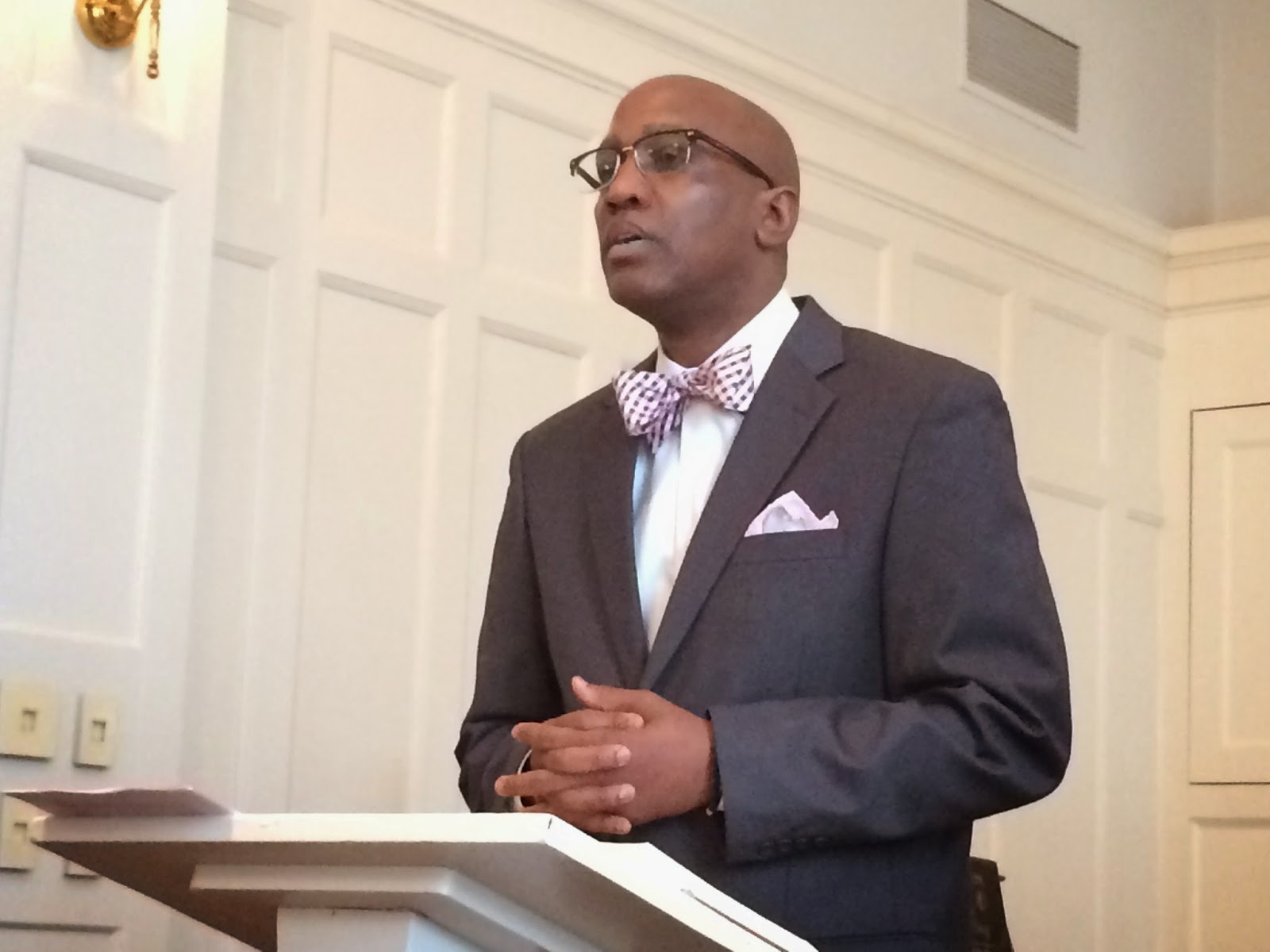
As we engage the work of justice in this place – Washington, DC, it is almost commonplace in these tough political times to raise questions about God’s activity among us. There are days when this work feels like an avalanche of concerns descending upon my desk. Calls from constituents who act as though I am the blame for the denomination’s problems; our office is the reason that numbers in the pews are decreasing; and that withholding their money is the only appropriate action that will make things better.

The fact of the matter is that the policy we advocate for in Washington, DC, as a denomination begins in a local Church (such as one of theirs) and we don’t work on it until it has been approved by the General Assembly. Our office never had a vote, never took a poll, never tweaked the language or offered the final version, however, it is our office that bears the brunt of the criticism.

I can imagine that Jesus understood what it was not to be responsible for the condition that angered people, but still be blamed for it – no matter how many healing miracles, or encounters with powers and principalities while doing advocacy work to stop federal programs from being cut or calling for affordable health care or fighting against a potentially disastrous Free Trade Agreement.

Think about it! He was Bethany being bullied by the Jews who even tried to stone him for blasphemy. Now, he arrives at the home of friends who blame him for not being there when their brother died; for arriving too late.

“Jesus, if you had been here my brother would not have died.”

“Jesus you came four days after he was in the tomb and you were two miles away.”

“Jesus, you spent your time with those people and we are your friends and you did not come in our time of worship.”

Why don’t we personalize this a little?

“You mean to tell me that your office is supporting an issue I do not like.  I am going to petition that we not give any money to your office from our Church.”

Amid the multiplicity of issues we face in this advocacy community, including the non-governance of our elected leaders who have become puppets for domestic and global corporations; Amid congregations and constituents who believe that their money ought to lead our work rather than God’s will through the Holy Spirit. Amid the growing tension in mainline protestant denominations regarding shrinking pools of money and members; Amid discussions over LGBT inclusion and entitlement among the wealthy; Amid the changing winds of our country’s landscape both racially and gender identity, police murders of African American boys and men, mass incarceration, gun violence, warring nations, and too many uneducated children, Jesus utters these command, “Believe.”

Jesus said to her, ”Did I not tell you that if you believe you will see the glory of God.”

Believe that our limitations will be met by the power of God through Jesus Christ.

In our culture, we often live with the mentality of not having enough. Walter Bruggemann writes of us as living in a mindset of scarcity rather than abundance. We have more than enough, but we are locked into systems that are always reminding us of the need for more and the fear of losing what we have. The reality is that we are a culture of poor managers/stewards over what God has given us.


When I traveled to South Sudan back in January, I saw children sitting out in 100+ degree heat on handmade benches with a teacher who had a marker and a flipchart. No books, plumbing, paper, pencils, individual seating, electricity or computers. However, in our country, we have school buildings filled with resources and we’re told last March that over 70 percent of our schools could possibly not achieve No Child Left Behind standards. Where there is a Church, mosque, or synagogue on the corner, no child or school should be left behind. It is not a matter of resources for us, it is lack of will to educate every child in the United States.

The growth of the prison industrial complex in the United States is a by-product of our failure to educate all children. So, our children and whole communities are choosing jail over Yale – while our politicians choose profitability over integrity. It is important that we in the faith community remember that we are people of faith here in DC and not pseudo-political staffers in a religious office. Our work is to assist others (both politicians and our Church constituents) to trust that the power of God can assist us in overcoming all of our deficits. This is done by faith-filled advocacy that leads to transformation on behalf of the Lord our God through Jesus Christ.

Jesus did not panic in the face of Martha’s criticisms or the skeptics that might have filled that house of bereavement that day. No, he reminded them that resurrection was not bound by the four-day law regarding the body and soul reuniting, but in the hands of an awesome God who can take our moments and our days and let them flow with ceaseless praise. We must remember this in our work.

Believe that even in our apparent defeats, God is still in control.

I have seen many things since coming to Washington, DC, five years ago.  Readings of Green Eggs and Ham by sitting congressional leaders. Our President and his family maligned. Arguing over seating charts among our congressional leaders to determine who will sit next to the other during the State of the Union. And, while all of this is going on, we are inundated with Isis attacks; Apartheid in the Middle East (Palestinian/Israeli struggle) – Not to mention our own apartheid in the police killings of African American men and ongoing border arrests, deportations that make immigrants another source of filling jail cells and cheap labor. This environment gets overwhelming sometimes. I have to spend time with real people so as not to become overwhelmed with this place called Washington, DC.

I am saddened that our efforts to enact common sense gun laws were defeated, Obamacare may be overturned by this Court, fast-track may guide our next trade agreement, and a faithful budget may not happen. But I remain hopeful, because I know who is in control.

_____

The Reverend Dr. J. Herbert Nelson is the Director for Public Witness at the Presbyterian Church (U.S.A.) Office of Public Witness in Washington, DC. He preached this sermon as part of the Lenten series of the weekly chapel services organized at the United Methodist Building in Washington, DC. The ecumenical advocacy community gathers weekly for worship.

Sunday, March 8, 2015

Voting Rights Manifesto


The Presbyterian Church (U.S.A.) joined partners in the Civil Rights community, Labor movement, faith community, and many others, to support the People's right to vote --


The People’s Voting Rights Manifesto

Issued March 8, 2015, at the 50th Anniversary of Bloody Sunday and the Selma to Montgomery March

____________________

We the People of these United States, to finally form a more perfect union, recommit to restore the letter and the spirit of the Voting Rights Movement, symbolized by the blood that was shed on this Edmund Pettus Bridge.  

Standing on the history of those who forged a new reality for America and the world, and building on the ongoing struggles of ALL communities today – on March 8, 2015, at the re-enactment of the sacred Bloody Sunday March – we commit to protecting the right to vote by ensuring that everyone in our space is a registered and educated voter.  We commit to engaging in individual and collective actions aimed at fixing the Voting Rights Act – one of our most important civil rights laws - in the wake of the Supreme Court’s decision in Shelby County v. Holder.  

Congress has the opportunity -- and the constitutional duty -- to act NOW!  We need effective federal legislation to:
  • Give the federal government and private citizens the legal tools they need to stop discriminatory voting and election changes before they are put into effect anywhere in the country; 
  • Ensure that voting changes are transparent by requiring all states, cities and counties to provide effective disclosure and publicity in modern media outlets that reach impacted voters and through local community organizations; 
  • Restore federal review (preclearance) of voting changes for those states, cities and counties with a history of recent voting discrimination as well as those with the greatest need; and
  • Authorize federal observers to respond to potential racial, language minority, or disability discrimination in any State, city or county.

WE MUST tell our members of Congress to show they support democracy by pressing for Voting Rights Act hearings in the House Judiciary Committee. 


We must stop voting discrimination in its tracks, and we further commit to inform and educate our communities about the history and the power of the vote that impacts every aspect of our lives from the womb to the tomb, now and for generations to come! 


Click here to read see this complete document with signers.

Wednesday, March 4, 2015

Decoding the Budget Webinar - Register Now

The Interreligious Working Group on Domestic Human Needs Presents:


Our federal budget has an enormous impact on poverty in America. Join us to learn basics about the budget appropriations process, how sequestration affects funding for domestic poverty programs, a review of some of the budget proposals we’ve seen so far in 2015, why poverty and the federal budget matter to us as advocates and people of faith, and action steps to get involved!


March 12, 2015
4:00pm Eastern


SPEAKERS:
Raed Jarrar, American Friends Service Committee
Amelia Kegan, Bread for the World
Tila Neguse, Friends Committee on National Legislation
Kathy Saile, Center on Budget and Policy Priorities


REGISTER HERE:


** The Interreligious Working Group on Domestic Human Needs is a Coalition of diverse faith voices speaking on poverty and economic justice in the United States. PC(USA) Office of Public Witness' Leslie Woods serves as co-chair of this table.

J. Herbert Nelson speaks on SCOTUS and Health Care

This morning, the Supreme Court heard oral arguments in King v. Burwell. This case could take away access to health care for 8 million people and cause premiums to spike for millions more. A decision in favor of the petitioner, King, could eliminate tax credits to buy health coverage through the Affordable Care Act in approximately three dozen states. The resulting chaos would wreak havoc on the health care system, placing the most vulnerable people in our communities at risk.
The Reverend Dr. J. Herbert Nelson, PC(USA) Director for Public Witness, joined with several other faith leaders, patients, families, nurses, doctors, healthcare providers, and other allies to support health care subsides for millions of people in the U.S. and to affirm that health care is a human right, an essential component of human dignity and just community.
Nelson said, "We advocate so vigorously for affordable health care, because we know that sickness in public places is a barrier to building community."
To read the press statement about this morning's events, click here


Rev. Dr. J. Herbert Nelson II in support of accessible healthcare for all, along with fellow heads of faith offices, Rabbi Lori Koffman (National Council of Jewish Women), Rev. Dr. Susan Henry-Crowe (United Method Church), Dr. Sayyid Syeed (Islamic Society of North America), Sandy Sorenson (United Church of Christ), and Sr. Simone Campbell (NETWORK).

J. Herbert Nelson's remarks, as prepared:

Benevolent, Beneficent, and Bountiful Creator, we humble ourselves before You as we ask that our prayers be heard and answered. We come before you as Ecumenical and Interfaith religious leaders appealing for guidance that only you can give. As we stand with millions of people today who could lose their health insurance by a ruling of this Supreme Court of our country, we petition You to exercise Your Supreme Authority that calls us here today to stand for the least of these among us.

We all can attest that in your mercy, you have reached down and provided a balm of healing amid our need. Therefore, our presence here today is a reminder to others that you are still in the business of hope and healing. Therefore, our advocacy for affordable healthcare is an affirmation of your Sovereign love for all of humanity.

We pray in the name of the Sovereign Creator, who chooses love over the law while giving grace in all things. Amen

Good morning. I am Reverend Dr. J. Herbert Nelson, Director of the Presbyterian Church (U.S.A.) Office of Public Witness in Washington, DC. The Presbyterian Church (U.S.A.) General Assembly has supported legislative efforts for affordable healthcare in Washington, DC for more than sixty years. They approved a resolution for advocacy on behalf of the uninsured. Despite our historic advocacy for a single payer system, we were excited in 2010 when the United States Congress passed the Affordable Care Act. We felt a move one stop closer to our nation realizing that the scriptures that we follow calls each of us to care for the least of these among us.

We advocate so vigorously for affordable healthcare, because we know that sickness in public places is a barrier to building community. Jesus teaches us through many biblical encounters that healing provides stability to the body; wholeness to the mind; and sustenance to the Spirit. When people are walking around unstable; lacking mental clarity and Spiritually disconnected it impacts households, institutions and whole communities.

In my travels, I have heard the testimonies of self employed professionals who are thankful that their premiums are significantly lower, because their pre-existing conditions are no longer held against them. On the other hand, I have heard from the poor who work every day and could not previously afford insurance for themselves or their children, giving thanks for the opportunity to know that they did not have to go to work sick or send their children to school while self diagnosing their conditions, because they could now afford a doctor’s care. When sick people are all around us, who cannot afford a balm of healing, we all are impacted.

I know these judges are deliberating over interpretations of the law, but let’s cut to the chase. This is an issue of national security, because my faith tells me that righteousness exalts a nation (Proverbs 14:34a). This court has an opportunity to render a supreme judgment if they can recognize in their deliberations that highest law that they can render is one that is based in love.

Let affordable healthcare remain affordable for the estimated 8 million persons who stand to lose their insurance.

###

Tuesday, March 3, 2015

J. Herbert Nelson to speak in support of health care for millions


FOR IMMEDIATE RELEASE MARCH 3, 2015                                                          For more information, contact:
Rev. Cynthia Abrams,
Director of Health and Wholeness
General Board of Church & Society
w: (202) 488-5636 c: (703) 586-7005
cabrams@umc-gbcs.org

                         
King v. Burwell:
Interfaith Press Conference and Prayer Vigil
at the U.S. Supreme Court

Faith leaders pray for health care access for all people  

An interfaith press conference and prayer vigil with Christian, Jewish, and Muslim faith leaders will be held on the front steps of the U.S. Supreme Court on Wednesday, March 4 at 10:15 a.m. These leaders will speak to the moral imperative to ensure access to health care for all people and the importance of health care from a faith perspective.
U.S. Supreme Court will hear oral arguments in King v. Burwell on March 4.This case potentially impacts millions of men, women, children, and families who have access to affordable and quality health care through the Affordable Care Act (ACA). 

WHO:
Rev. Dr. J. Herbert Nelson II, Director for Public Witness of the Presbyterian Church (U.S.A.)
Rabbi Lori Koffman, National Council of Jewish Women
Rev. Dr. Susan Henry-Crowe, General Secretary for the United Methodist General Board of Church and Society
Dr. Sayyid Syeed, Islamic Society of North America 
Sandy Sorenson, Director of the United Church of Christ, Justice and Witness Ministries
Sr. Simone Campbell, Executive Director of NETWORK

WHERE: 
In front of the U.S. Supreme Court

WHAT: 
Faith Leaders Press Conference and Prayer Vigil for health care. Faith leaders will address the importance of subsidies and ensuring that everyone has access to health care. Speakers will be available for interviews. 

WHEN: 
March 4 from 10:15 – 10:30 a.m. 
For more information, contact Michelle C. Whittaker at (202) 488-5632 or (202) 701-8420.

The Presbyterian Office of Public Witness is the public policy information and advocacy office of the General Assembly of the Presbyterian Church (U.S.A.). Its task is to advocate, and help the church to advocate, the social witness perspectives and policies of the Presbyterian General Assembly.

The National Council of Jewish Women is a volunteer organization that has been at the forefront of social change for over a century — championing the needs of women, children, and families — while courageously taking a progressive stance on such issues as child welfare, women’s rights, and reproductive freedom.

The General Board of Church & Society is one of four international general program boards of The United Methodist Church. Prime responsibility of the board is to seek implementation of the Social Principles and other policy statements on Christian social concerns of the General Conference, the denomination's highest policy-making body.

The Islamic Society of North America fosters the development of the Muslim community, interfaith
relations, civic engagement, and better understanding of Islam.

The Justice and Witness Ministries is the justice and advocacy arm of the United Church of Christ. The Washington office responds to God's commandments to do justice and seek peace through public policy advocacy and witness.

NETWORK, a Catholic leader in the global movement for justice and peace, educates, lobbies, and organizes for economic and social transformation. NETWORK is a progressive voice within the Catholic community that has been influencing Congress in favor of peace and justice for more than 40 years. 


###